
SUPPLIER DATABASE

Supplier database for ecommerce sourcing

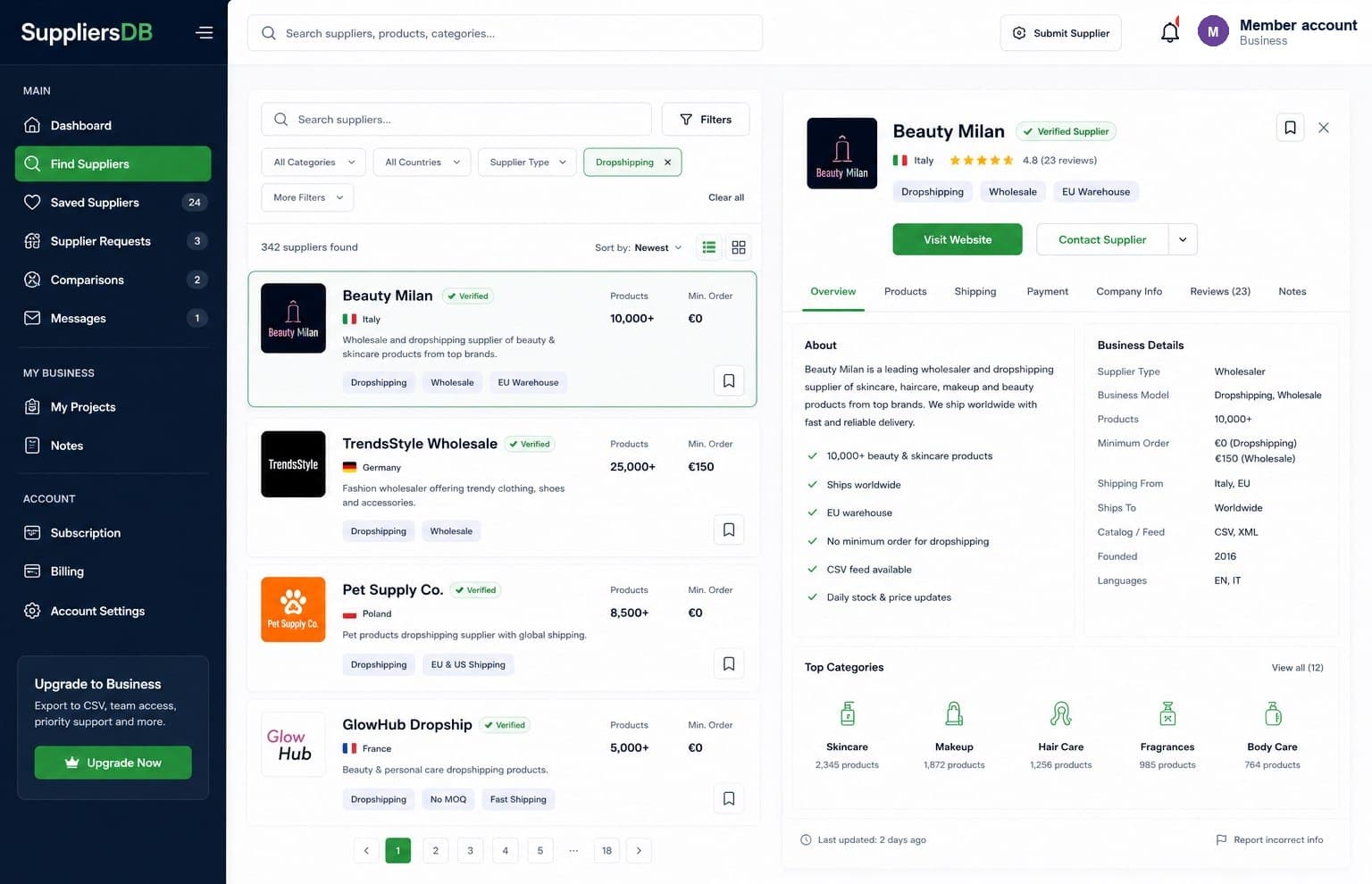
SuppliersDB organizes 1,070 supplier records across 27 countries and 45 categories for ecommerce sourcing research. Search by market, product category and supplier model, save relevant candidates and prepare direct outreach from one workspace. The database includes wholesale, dropshipping, manufacturing and distribution context where available. It is designed to reduce scattered research, not to replace commercial due diligence: account eligibility, prices, minimum orders, delivery coverage, product rights and current terms must always be confirmed with the supplier.

Search 1,070 supplier recordsCompare 27 countries and 45 categoriesBuild a shortlist before direct outreach
Supplier database search workspace for ecommerce sourcing
1,070supplier records
27countries
45categories
A transparent supplier review methodologyReview labels describe data checks; they do not guarantee supplier performance.
How records are reviewed

Choose a supplier database around your sourcing brief

Start with a clear product category, customer market and preferred business model. A dropshipping seller, wholesale reseller and private-label brand will ask different questions and need different supplier capabilities. Use country and category filters to remove obvious mismatches, then review the remaining records against delivery, catalog, minimum-order and account requirements.

  • Define target countries and product categories
  • Separate wholesalers, distributors and manufacturers
  • Record minimum-order and catalog-data needs

Treat every database record as a research lead

Supplier records help identify businesses worth investigating, but inclusion is not an endorsement. Check the official website, company identity, product scope and contact route. Ask for current price lists, reseller conditions, delivery and returns information, and relevant product documentation before making commitments or publishing products in your store.

  • Verify details through official supplier channels
  • Confirm current commercial and delivery terms
  • Keep verified facts separate from assumptions

Move from a long list to a useful shortlist

A smaller, well-qualified shortlist is more useful than hundreds of unreviewed names. Save candidates that match the same sourcing brief and compare them using consistent questions. This makes follow-up easier, exposes missing information and helps a team understand why a supplier remains under consideration.

  • Use consistent qualification criteria
  • Save notes and unanswered questions
  • Recheck critical details before launch
FAQ

Common questions

How many supplier records are in SuppliersDB?

The database currently contains 1,070 supplier records across 27 countries and 45 categories. Counts change as records are reviewed and updated.

What types of suppliers can I research?

Coverage includes wholesale, dropshipping, distribution, manufacturing, private-label and print-on-demand context where available. The exact commercial model must be confirmed directly.

Does database access guarantee a supplier account?

No. Each supplier controls its own eligibility, prices, territories, minimum orders and sales-channel rules.

ACCESS

Unlock the supplier database

Start with the public scope, then unlock supplier profiles, websites and sourcing details in the member workspace.

View plans